|
|
M27 - Dumbell Nebula
The Dumbbell Nebula (also known as Messier 27, M 27, or
NGC 6853) is a
planetary nebula (PN) in the
constellation
Vulpecula, at a distance of about 1,360
light years.
This object was the first
planetary nebula to be discovered; by
Charles Messier in 1764. At its brightness of
visual magnitude 7.5 and its diameter of about 8
arcminutes,
it is easily visible in binoculars, and a popular observing target in
amateur telescopes.
Click on images for high resolution (opens new browser)
|
|
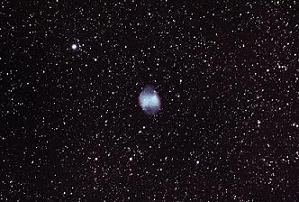
First try at M27 - July 7, 2007
27 60-second exposures at ISO 800
Orion ED80
Un-modified Canon RebelXT 350D
No filters
Darks/Flats/Bias applied. |
|
|
|
|
|
|
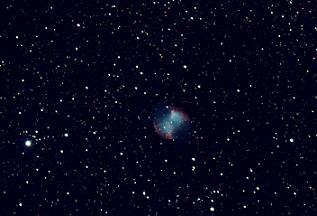
2nd Try - July 26, 2008
20 60-second exposures at ISO 800
Orion ED80
Hap Griffin-modified Canon RebelXT 350D
No filters
Darks/Flats/Bias applied.
Published in the
Sky & Telescope Magazine's
Photo Gallery. |
|
|
|
|
|
|
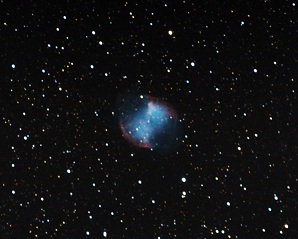
Collection of previously-taken exposures from July 2007 and July 2008
Re-processed on 4/24/2012
45 60-second exposures
Orion ED80
Canon RebelXT 350D
ISO 800
Darks, Flats, and Bias applied. |
|
|
|
|
|
|
|
|
|
|